
How to Power a CPAP Machine During a Power Outage
For millions of people with sleep apnea, a blackout isn’t just annoying — it can turn a normal night into a medical emergency. This guide shows you how to keep a CPAP running safely on battery power using lab-tested settings, the right DC cable, and realistic runtime math.
During an Outage, Do This First
- Turn Climate Control → Manual and set Humidity Level → OFF.
- If you have one, switch to a DC converter cable instead of the AC wall plug.
- Plug only the CPAP into the battery — unplug non-essential devices.
- Use the lowest comfortable pressure and disable ramp features if possible.
Below, we’ll walk through the “energy vampire” settings, the DC power hack, and our lab-tested battery picks so you can sleep through a blackout instead of watching the clock.
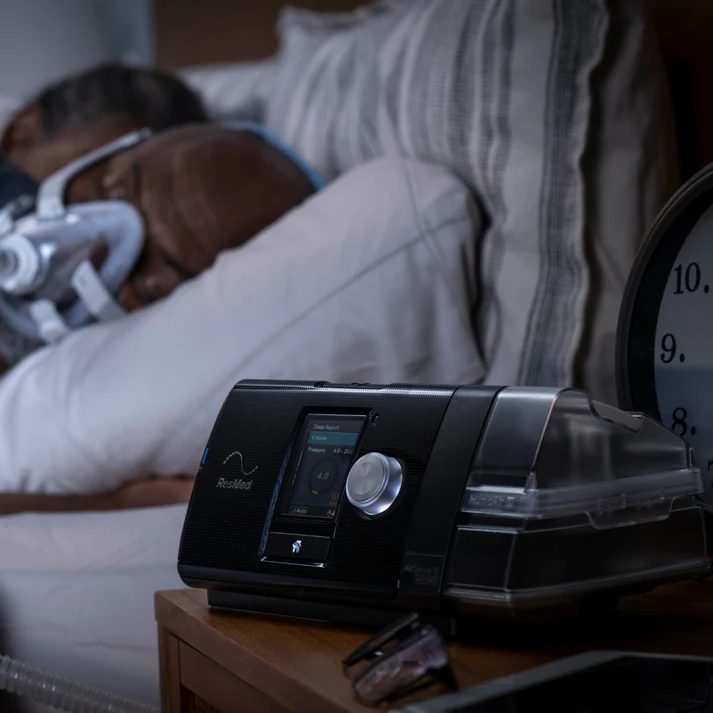
A small, quiet battery can keep a CPAP running for multiple nights when set up correctly.
For 30 million Americans, a power outage isn’t just an inconvenience—it’s a medical emergency. If you rely on a CPAP machine (like the ResMed AirSense 10 or 11) for sleep apnea, a blackout means a sleepless, dangerous night.
Most people panic and buy a massive, expensive gas generator. You don’t need one. Our lab tests show that with the right settings and a specific $30 cable, you can run a standard CPAP for 3+ nights on a silent battery that sits right on your nightstand.
The “Energy Vampire”: Why Your CPAP Dies So Fast
We tested the power draw of the most common machines. The results were shocking. The machine itself uses very little power. The Heated Humidifier and Heated Tube are the real energy hogs.
The “Energy Vampire”: Why Your CPAP Dies So Fast
In our tests, the blower motor inside common CPAP machines used surprisingly little power. The wattage spike came from the Heated Humidifier and, on some models, the Heated Tube. Turning these off can extend runtime by several nights on the exact same battery.
| Setting | Avg Power Draw | Runtime on 500Wh Battery |
|---|---|---|
| Humidifier ON (Level 4) | ~65 Watts | ≈ 6.5 hours (not even one full night) |
| Humidifier OFF (Passive) | ~12 Watts | ≈ 35 hours (about 4 nights) |
Lab Tip: On ResMed AirSense machines, set Climate Control → Manual and Humidity Level → OFF as soon as the power fails. This single change can roughly quadruple your battery life.
The “DC Hack” (How to Get 30% More Free Power)
Most portable power stations have a standard wall outlet (AC). But your CPAP machine actually runs on DC power (look at the brick on your power cord).
If you plug your CPAP wall plug into the battery, the battery has to convert energy from DC → AC → DC. This “conversion tax” wastes about 20-30% of your battery’s capacity as heat.
The Solution: Buy a DC Converter Cable for your specific machine. It plugs directly into the “Cigarette Lighter” port on the battery, bypassing the conversion entirely.
Best Batteries for CPAP (Lab-Tested Recommendations)
Best Batteries for CPAP (Lab-Tested Picks)
These are the specific batteries we’ve tested with CPAP machines. Both work with AC and DC, but they shine when paired with the DC converter cables listed above.
Best Budget Choice
1. The “One Night Stand”
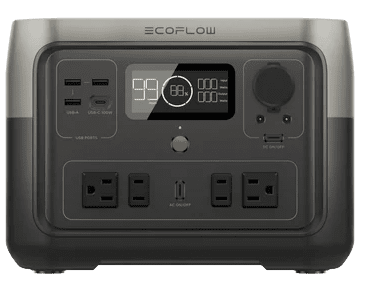
EcoFlow River 2 (256Wh)
Small, lightweight, and fast-charging. With the humidifier OFF, it can typically power a CPAP for 1–2 nights, depending on pressure settings.
Check Price (~$180)Best Safety Choice
2. The “Storm Prepper”
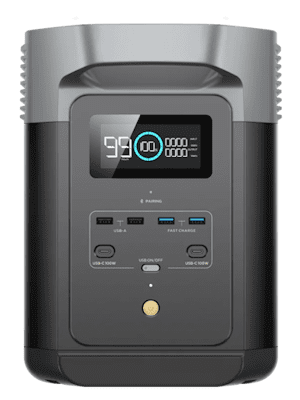
EcoFlow Delta 2 (1024Wh)
Enough capacity to run a CPAP for several nights with the humidifier OFF, or a full night with humidity ON — and still have power left for a fridge or lights in the morning.
Check Price (~$650)Purchases made through the links above help fund new Home Power Lab tests at no extra cost to you.
Run Your Own Numbers
Do you have a DreamStation, an AirMini, or high-pressure settings? Don’t guess. Use our calculator to see exactly how many hours your specific setup will last.
Run Your Own CPAP Runtime Numbers
Different machines, pressures, and cables change the math. Use the CPAP runtime calculator below to estimate how long your exact setup will run on a given battery.
- Enter your battery size in watt-hours (Wh).
- Select your CPAP model or enter its wattage.
- Choose AC or DC, depending on whether you’re using the wall plug or DC converter cable.
- Enter how many hours of sleep you need — we’ll tell you if the battery is big enough.
This is a planning tool, not a medical device. Always leave extra buffer for cold temperatures, battery aging, and nights when your pressure runs higher than usual.
Need a Precise Battery Calculation?
We have retired the basic estimator. Use our new Night-Ops Configurator to calculate exact Watt-Hours based on your pressure, humidity, and machine type (ResMed, DreamStation, etc.).
Launch Night-Ops ConfiguratorIncludes “Survival Switch” & Visual Diagnostics
Final Checklist for CPAP Users
Final Checklist for CPAP Users
Before the next storm, walk through this list so you’re not troubleshooting in the dark.
- Turn off heated humidifier and heated hose in your CPAP’s settings and learn where those options live so you can change them quickly.
- Order the correct DC converter cable for your specific machine now — they often sell out during major weather events.
- Test your setup on a normal night by running your CPAP from the battery start-to-finish.
- Label your cables (CPAP DC, battery charger, extension cord) so anyone in the house can set it up if you’re not home.
- Keep the battery topped off during storm season and store it where you can reach it without hunting through the garage.
If your CPAP is medically necessary, talk with your sleep doctor about backup plans. A portable battery is one layer of protection — not a substitute for medical advice.
CPAP Backup Power – Mini FAQ
How long can a CPAP run on a portable battery?
With the humidifier ON, even a 500Wh battery may not last a full night. With the humidifier OFF and a DC cable, the same battery can often power a CPAP for 3–4 nights at typical pressures. Use the runtime calculator above for numbers based on your exact setup.
Do I need a pure sine wave inverter for my CPAP?
Most modern CPAPs are designed to work safely with pure sine wave output. That’s standard on reputable portable power stations from brands like EcoFlow and Jackery. Cheap modified sine wave inverters may cause noise or reliability issues — we don’t recommend them for medical devices.
Is it better to use AC or DC for CPAP?
DC is better whenever you have the correct converter cable. It skips the inverter step and typically gives you 20–30% more runtime. AC still works, but it wastes power as heat inside the inverter and CPAP power brick.
Can I power other devices at the same time?
You can, but every extra device shortens your CPAP runtime. For overnight safety, we recommend dedicating the battery to your CPAP only and charging phones or running lights from a separate power bank if possible.
Is this medical advice?
No. This guide focuses on power and runtime. Always follow the advice of your sleep doctor or equipment provider regarding how and when to use your CPAP, especially if you have serious health conditions.

Leave a Reply
You must be logged in to post a comment.